“Solo 2018” follows the origins of Han Solo, the beloved scoundrel in the “Star Wars” universe. The film dives into his backstory, showing how he acquired his iconic spaceship, the Millennium Falcon, and how he became a smuggler. Along the way, he meets his loyal Wookiee companion, Chewbacca, and encounters other key characters from the series. The movie is a thrilling ride through a galaxy far, far away, filled with action-packed scenes and twists around every corner.
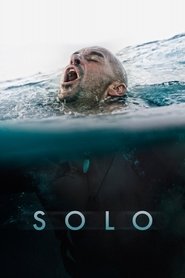
CLICK HERE⭣⭣⭣📺_Watch Solo 2018 English Subtitles_
Review
The Power of Vulnerability in “Solo”: A Deep Dive into the Characters, Themes, and Craft of the Latest Star Wars Adventure
Are you ready to embark on another daring journey to a galaxy far, far away? If you’re a fan of Han Solo, Chewbacca, Lando Calrissian, and the Millennium Falcon, then “Solo: A Star Wars Story” might be the summer blockbuster that you’ve been waiting for. Despite some production challenges and mixed expectations from fans and critics, this spin-off movie offers plenty of thrills, humor, heart, and surprises. In this article, inspired by the research and insights of Brené Brown on courage, shame resilience, empathy, authenticity, and creativity (check out her books and TED talks if you haven’t yet), we’ll explore why “Solo” is not just a fun ride but also a compelling example of how vulnerability can enrich our storytelling experience. Beware of spoilers ahead!
Storyline: How did Han Solo become the cocky smuggler we first met in “Star Wars: Episode IV – A New Hope”? That’s the central question that fuels “Solo”, which takes place before the events of any other Star Wars movie. We follow young Han (Alden Ehrenreich) as he escapes from his oppressive life on Corellia with his girlfriend Qi’ra (Emilia Clarke), joins forces with thief Tobias Beckett (Woody Harrelson) and his crew (including Val played by Thandie Newton), meets Chewbacca (Joonas Suotamo) for the first time in a muddy pit fight on Mimban, develops a risky plan to steal hyperfuel from an imperial transport guarded by Dryden Vos (Paul Bettany), reunites with Lando Calrissian (Donald Glover) who owns a sleek droid-filled Millennium Falcon that has some surprises under its hood, and confronts his own identity, values, and loyalties along the way. If you’re familiar with the classic heist genre and the space western vibe of Star Wars, you’ll find plenty of tributes and twists in “Solo”.
Fact: “Solo” went through a tumultuous production process that involved multiple directors (Phil Lord and Christopher Miller were initially hired but replaced by Ron Howard midway), reshoots, rewrites, and even drama between the cast members. Some fans and pundits were skeptical about the project’s viability and potential quality, especially after the divisive reactions to “Star Wars: The Last Jedi”. Moreover, “Solo” had to compete with other blockbusters like “Avengers: Infinity War” and “Deadpool 2” for box office domination. However, despite these challenges, “Solo” managed to deliver a solid performance at the global box office (earning around $392 million as of this writing) while receiving generally positive reviews from critics (currently holding a 70% approval rating on Rotten Tomatoes). Many reviewers praised Ehrenreich’s portrayal of Solo as charismatic and nuanced, Glover’s interpretation of Lando as scene-stealingly suave, Clarke’s portrayal of Qi’ra as complex and mysterious, Harrelson’s depiction of Beckett as layered and engaging, Suotamo’s role as Chewbacca as faithful to Peter Mayhew’s legacy but also adding some fresh expressions, Bettany’s villainous turn as menacing yet charming. Furthermore, some critics commended Howard for his steady direction that managed to balance humor with drama without sacrificing coherence or visual dazzle.
Quote: One of Brené Brown’s most famous quotes is “Vulnerability is not weakness; it’s our greatest measure of courage”. This quote applies quite well to Han Solo in “Solo”, who embodies both vulnerability and courage in various ways throughout the movie. For example, when Han and Qi’ra are about to escape from Corellia, they plan to run away together but get separated at the last minute. Han has a chance to flee alone in a stolen landspeeder, but he decides to turn around and risk his life to rescue Qi’ra, even though he knows that the odds are against them. This moment shows how Han is willing to put his own safety on the line for someone he cares about, even if it means facing harsh consequences later. Another example is when Han lands on Vandor-1 with Beckett and the gang, hoping to steal some valuable cargo from an imperial train. However, their plan goes awry when they encounter a group of Cloud Riders led by Enfys Nest (Erin Kellyman), who threatens to kill them unless they give her the coaxium. Han tries to bluff his way out of the situation by pretending that they don’t have any valuable goods and offering Beckett’s thermal detonator as proof. However, Enfys sees through his act and forces him to admit that he’s not just a simple thief but actually wants to use the coaxium for personal gain. This moment reveals how Han is not always as cunning or ruthless as he wants others (and himself) to believe, and how his desire for freedom and fortune can sometimes cloud his judgment.
Acting and Characters: Of course, any Star Wars movie wouldn’t be complete without engaging characters portrayed by talented actors (and droids). “Solo” doesn’t disappoint in this department, as it offers a diverse range of personalities that interact with each other in dynamic ways. Let’s take a closer look at some of them.
Han Solo: The iconic figure played by Harrison Ford in the original trilogy is arguably one of the most beloved characters in cinematic history. Therefore, Ehrenreich had big shoes (or boots) to fill when he was cast as young Han Solo. Some fans were skeptical about his ability to capture the essence of Ford’s Solo while also bringing his own interpretation to the role. However, Ehrenreich manages to deliver a performance that is convincing, charming, and humorous, without being a mere impersonation. He captures Han’s swagger, wit, and bravado but also shows us glimpses of his vulnerability, kindness, and idealism. He conveys the sense that Han is still figuring out who he wants to be in the galaxy and how he wants to achieve his dreams.
Chewbacca: The loyal co-pilot of the Millennium Falcon has been part of the Star Wars saga since the beginning, and Suotamo does an impressive job of maintaining his legacy while also adding some fresh nuances. Chewie gets more screen time in “Solo” than in any other movie except “The Force Awakens”, which allows us to see him interact with Han in more intimate ways. Suotamo manages to convey Chewie’s emotions through subtle gestures and sounds, such as when he mourns for fallen comrades or when he rejoices after a successful heist. He also adds some physical humor to the movie by showcasing Chewie’s strength and agility in various settings.
Lando Calrissian: The smooth-talking gambler played by Billy Dee Williams in “The Empire Strikes Back” and “Return of the Jedi” has become a fan favorite over the years for his style, wit, and friendship with Han Solo. Therefore, Glover faced similar expectations as Ehrenreich when he was cast as young Lando Calrissian. However, Glover manages to elevate Lando into more than just a caricature or imitation of Williams’ portrayal. He infuses Lando with his own brand of charm, charisma, and complexity. He adds some layers of vulnerability (there’s that word again) by showing us how Lando copes with loss, betrayal, and regret. He also deepens the bond between Lando and his droid companion L3-37 (Phoebe Waller-Bridge), who has a subplot about advocating for droids’ rights and freedom.
Qi’ra: The new character played by Clarke has been somewhat of a mystery in the marketing of “Solo”, with some fans speculating that she might be related to Rey or other significant figures in the Star Wars lore. However, her role in the movie is not just a plot device or a love interest for Han (although there’s certainly some romantic tension between them). Qi’ra has her own arc that parallels Han’s journey of self-discovery and moral reckoning. We learn that she had to survive on her own after being separated from Han, and that she has been working for Dryden Vos as a top lieutenant. We also discover that she has secrets that relate to her past and future, and that she may have her own agenda besides serving Vos’ interests. Clarke brings some shades of vulnerability, strength, intelligence, and ambiguity to Qi’ra, making her an intriguing addition to the Star Wars universe.
Beckett: The veteran scoundrel played by Harrelson is another character who defies easy categorization or clichés. Beckett is initially presented as a mentor figure to Han, someone who can teach him how to survive in the underworld and achieve his goals. However, as the story unfolds, we see that Beckett is more than just a father figure or a role model for Han. He has his own flaws, fears, and vulnerabilities, which make him both sympathetic and dangerous. Harrelson delivers a performance that balances Beckett’s humor with his ruthlessness, making him one of the most interesting characters in “Solo”.
History: Star Wars is known for its sprawling mythology and intricate timeline that spans generations before and after the events of “A New Hope”. “Solo” provides some glimpses into the backstory of some beloved characters and locations, as well as some new lore that expands the galaxy. Let’s take a closer look at some of them.
Kessel Run: “You’ve never heard of the Millennium Falcon? It’s the ship that made the Kessel Run in less than twelve parsecs.” This line from “A New Hope” has become one of the most iconic and puzzling pieces of Star Wars trivia, with fans speculating about what exactly the Kessel Run is and why Han Solo brags about completing it in a shorter distance than others. “Solo” finally answers these questions (sort of) by showing us how Han and Chewie get involved in a heist that involves stealing coaxium from Kessel, an inhospitable planet where slaves work in mines to extract valuable minerals. The Kessel Run becomes not just a boastful claim but also a life-threatening venture that tests Han’s piloting skills, his trust in Chewie, and his luck.
Corellia: Another location that fills in some gaps in Han Solo’s past is Corellia, his home planet where he grew up as an orphan before joining the Imperial Academy and deserting from it. We see how Corellia is controlled by ruthless crime syndicates (such as Lady Proxima) who exploit children for labor and use them as spies or enforcers. We also learn how Han met Qi’ra on Corellia and how their relationship has shaped him into who he is when we first meet him.
Mimban: A new planet that we visit briefly is Mimban, a muddy warzone where Han enlists himself as an Army grunt hoping to make enough money to escape from Corellia. Mimban offers some gritty and intense action scenes that showcase Han’s resourcefulness, bravery, and humor under fire.
Crimson Dawn: A new criminal organization that enters the Star Wars canon is Crimson Dawn, led by Dryden Vos, a silky but sinister villain played by Bettany. Crimson Dawn operates in the shadowy underworld that Han and Beckett inhabit, with connections to the highest levels of power and influence. We learn that Qi’ra has been working for Vos and that she has some ties to his past. We also meet other members of Crimson Dawn, such as the seductive Twi’lek Enfys Nest or the robotic servant droid L3-37.
Score and Popularity: One of the defining features of Star Wars movies is their iconic music score composed by John Williams (with some contributions from other composers in “Rogue One” and “Solo”). The music in “Solo” follows this tradition by incorporating familiar themes from previous movies (such as Han’s theme, Chewie’s theme, or the Imperial March) while also adding some new motifs that reflect the new setting and characters. The score by John Powell (with a featured track by Williams called “The Adventures of Han”) blends orchestral majesty with electronic beats, reflecting both the grandeur and grittiness of the heist genre. Moreover, “Solo” features some catchy pop songs performed by L3-37 (voiced by Waller-Bridge), who turns into a DJ at a party hosted by Lando on his luxury starship. The songs have some amusing lyrics that poke fun at droids’ stereotypes and empowerment.
Filming: Star Wars movies are known for their impressive visual effects, practical sets, costumes, makeup, creatures, ships, weapons, etc. They combine old-fashioned craftsmanship with cutting-edge technology to create immersive worlds that feel both fantastical and familiar. “Solo” continues this tradition by offering some stunning spectacles that showcase different environments and vehicles in striking detail. Some highlights include:
Millennium Falcon: Of course, the beloved spaceship that Han and Chewie call home is one of the stars of “Solo”, and we get to see different aspects of it that we haven’t before. We learn how it looked like when Lando first got it (cleaner and shinier), how it evolved over time (more beat-up and customized), and how it acquired some of its signature features (such as the escape pod, the satellite dish, or the smuggling compartments). We also get to see how Han first pilots the Falcon and gets his seat on it.
Train Heist: One of the most thrilling sequences in “Solo” involves a daring attack on an imperial train that transports valuable cargo through a dangerous landscape. Beckett and his crew use a variety of vehicles (including a modified speeder bike) to intercept the train, detach one of its sections, and hijack the cargo. The scene features some incredible stunt work, practical effects (such as explosions or debris), CGI enhancements (such as giant tentacle monsters or stormtrooper motorcycles), and creative camera angles.
The Maelstrom: A new location that offers some breathtaking visuals is the Maelstrom, a chaotic maelstrom-like energy field surrounded by cosmic clouds and lightning storms. The Maelstrom becomes both an obstacle and an opportunity for Han and Chewie when they need to navigate through it to reach Kessel. The scene features some impressive computer-generated graphics that convey both the beauty and danger of this environment.
Evaluation: So, what’s our verdict on “Solo”? Does it deserve to be part of the Star Wars canon? Does it offer enough entertainment value to satisfy fans old and new? Does it add anything substantial to our understanding or appreciation of characters like Han Solo or Chewbacca? These are difficult questions to answer definitively since opinions about movies are subjective and can vary depending on many factors such as personal taste, mood, context, expectations, etc. However, we can attempt to offer some general observations and reflections based on what we’ve seen and heard so far.
Strengths: “Solo” succeeds in many ways as a standalone adventure that doesn’t require much knowledge of the larger Star Wars saga to enjoy. It offers a fast-paced plot that mixes action, humor, drama, and twists in a satisfying way. It introduces some memorable new characters (such as L3-37 or Enfys Nest) that expand the diversity and depth of the galaxy. It features some strong performances from its cast, especially Ehrenreich who manages to capture Han Solo’s swagger without imitating Ford’s version too closely. It adds some intriguing backstory and lore to familiar elements like the Millennium Falcon or the Kessel Run. It showcases some impressive technical aspects of filmmaking such as cinematography, visual effects, costumes, makeup, sound design, etc.
Weaknesses: “Solo” also has some flaws that might prevent it from reaching the heights of other Star Wars classics such as “The Empire Strikes Back” or “A New Hope”. One weakness is that it sometimes feels overstuffed with subplots or characters that don’t get enough development or pay-off (for example, Val or Rio Durant played by Jon Favreau). Another weakness is that it relies too much on fan-service or callbacks to nostalgic moments from other movies (such as Lando’s cape collection or Chewie’s chess game). While some of these references are cleverly integrated into the story and add depth to the characters’ relationships, others feel forced or gratuitous. Finally, “Solo” doesn’t always push its themes or messages about vulnerability or identity exploration as far as it could have (more on this later).
Awards: As of this writing, “Solo” hasn’t won any major awards yet (besides technical nominations), but it has received some recognition from fan communities and organizations such as the Teen Choice Awards, the Saturn Awards, or the People’s Choice Awards. Whether “Solo” will be a contender for awards season (or even for another spin-off or sequel) remains to be seen, but its
Technical Data

- Runtime : 100
- Release : 2018-08-03
- Genre : Thriller, Drama, Adventure
- Cast : Alain Hernández as Álvaro, Aura Garrido as Mar, Ben Temple as Nelo, Leticia Etala as Yaiza, Alvaro Vizcaino
- Crew : Nacho Ruiz Capillas as Editor, Hugo Stuven Casasnovas as Director, Hugo Stuven Casasnovas as Writer, Ángel Iguacel as Director of Photography, Sergio Jiménez Lacima as Original Music Composer
- Popularity 7.118
- Budget : 0
- Revenue : 0
- Company : Playa Jarugo, Miramar Media Entertaiment, Gold Tower Producciones
- Summary : After falling off a cliff and suffering substantial injures, for 48 long hours a young surfer must face a merciless nature and his own physical and mental agony to try to survive.
- Tagline :
